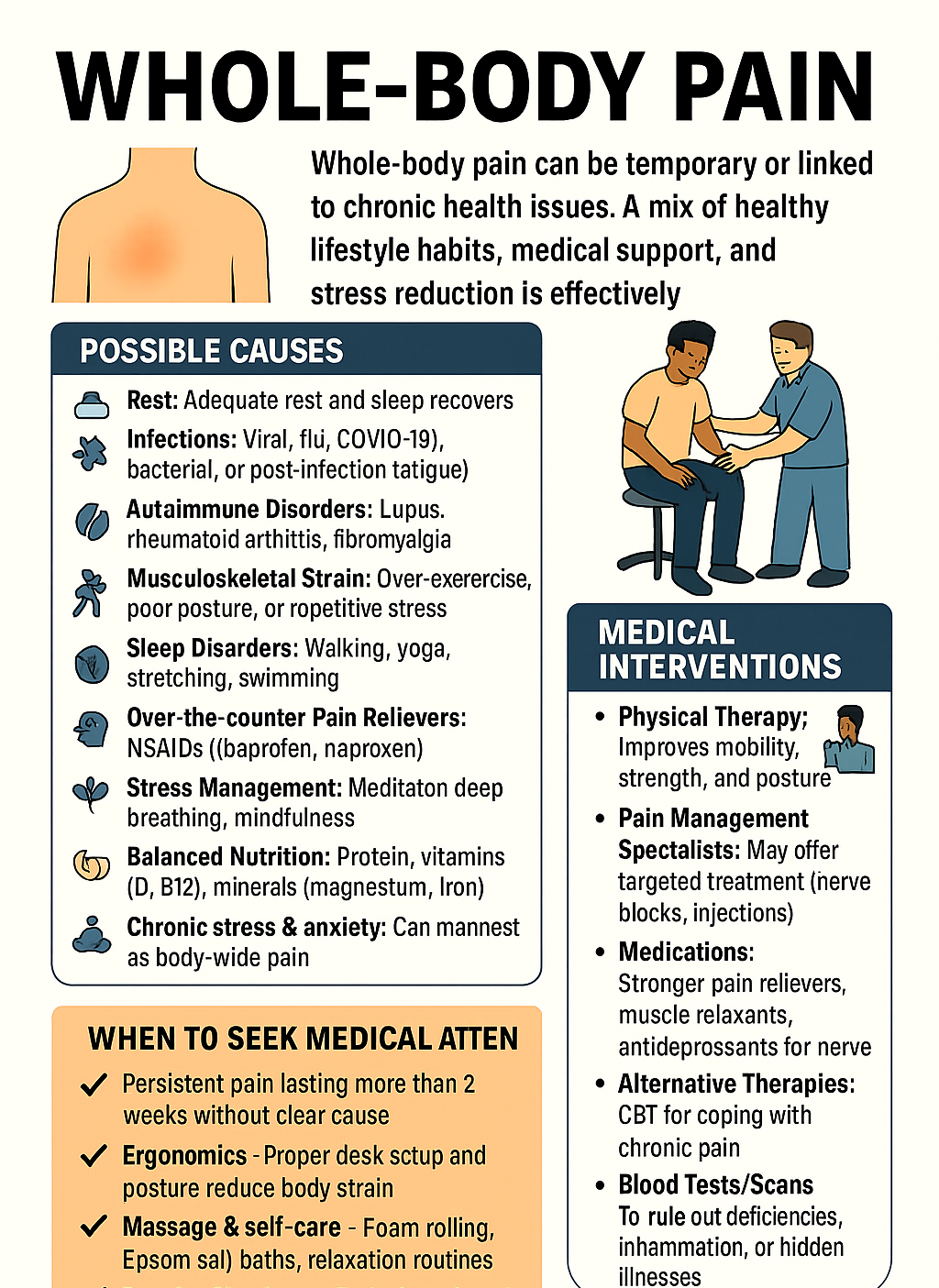
Whole-body pain, also known as generalized body aches, can range from temporary fatigue to chronic conditions. Understanding the cause is key to treatment.
🦠 Infections: Flu, viral fever, COVID-19
💪 Musculoskeletal Issues: Overexertion, poor posture, injuries
♾️ Chronic Conditions: Fibromyalgia, arthritis, thyroid problems, autoimmune diseases
🛌 Lifestyle Factors: Dehydration, poor sleep, nutritional deficiencies, stress
✅ Simple steps can ease pain and promote recovery:
😴 Rest: Essential for healing after fatigue, infection, or injury
💧 Hydration: Prevents cramps and supports body functions
🌡️ Heat & Cold Therapy:
🔥 Heat → Relaxes stiff muscles, boosts circulation
❄️ Cold → Reduces swelling and inflammation
🚶 Gentle Exercise: Walking, swimming, yoga improve circulation & flexibility
💊 OTC Pain Relief: NSAIDs (ibuprofen, naproxen) for pain and swelling
🧘 Stress Management: Meditation, deep breathing, mindfulness
🥦 Nutrition: Balanced diet with vitamins, minerals & protein supports muscles and joints
When pain persists, medical help may be needed:
🏋️ Physical Therapy: Improves strength and mobility
👨⚕️ Pain Management Specialists: Offer medications, injections, therapies
💊 Prescription Medications: Stronger pain relievers, muscle relaxants, or condition-specific drugs
🧠 Psychological Support: CBT to manage chronic pain coping
🌿 Alternative Therapies: Acupuncture, massage, yoga
Seek medical attention if pain is:
🔴 Severe or persistent
🤒 Accompanied by fever, numbness, weakness, or weight loss
🛑 Limiting daily activities or disturbing sleep
Whole-body pain may be short-term or a sign of a chronic condition.
👉 Combining lifestyle care with medical support ensures better pain management and quality of life.